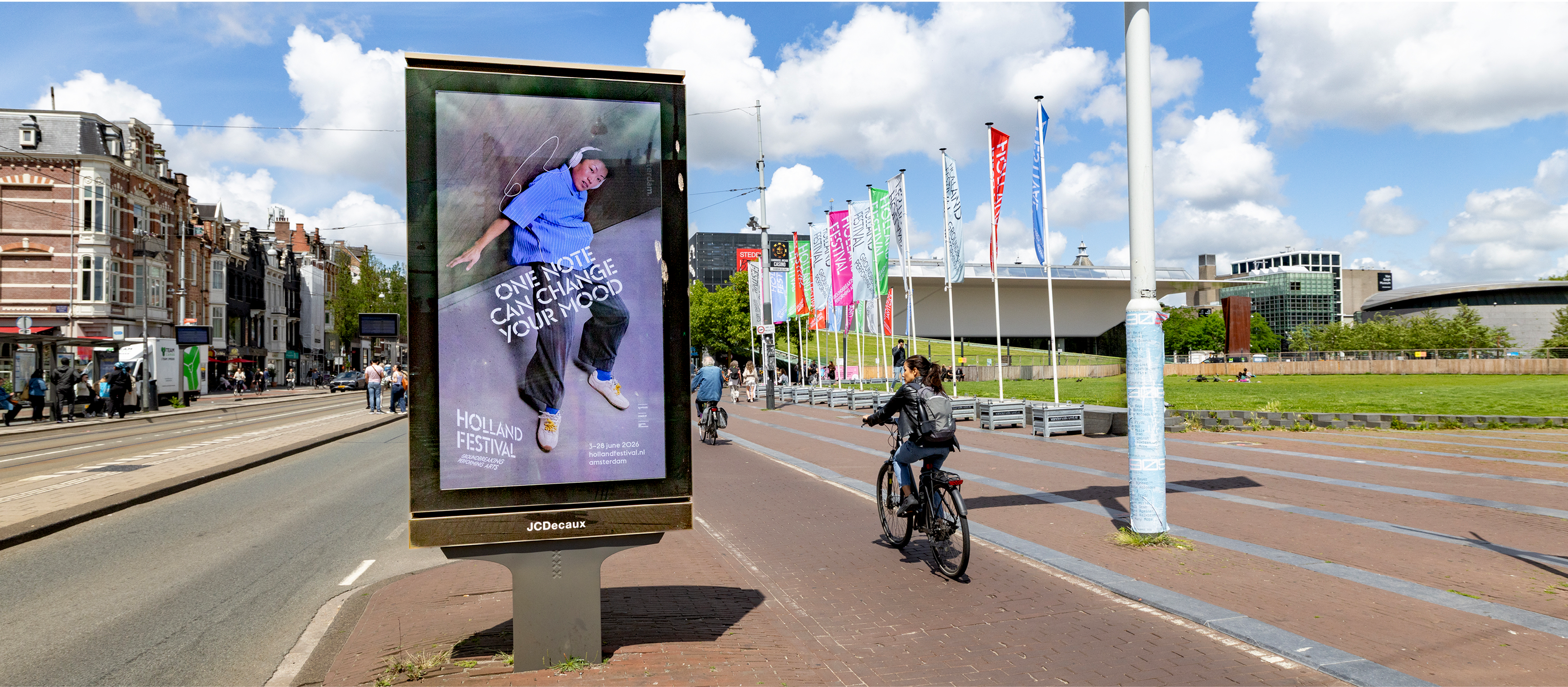
 One note can change your mood.
One movement can change your perspective.
One dialogue can change your mind.
Holland Festival is also defined by the way its rich programme travels: through the theatre, through the city, and through conversations. In 2026, the festival was present on all these levels simultaneously. What began as an idea on stage found its way to a broad audience through digital screens, radio, podcasts, social media, and public spaces — reaching everyone from loyal festivalgoers to new audiences.
The festival was carried by a network of makers, partners, and media, allowing it to extend far beyond the 23 venues where the programme took place. Through livestreams, podcasts, national broadcasts, and online platforms, the festival remained visible beyond the theatre walls. Below, you can read how the Holland Festival was seen, heard, and shared in 2026.
Reach
Over 26 days, the Holland Festival welcomed visitors at 23 locations across the city. The festival presented 104 performances, including 14 co-productions and 2 original productions. This year, 27 makers made their Holland Festival debut.
The festival’s reach extended far beyond the venues themselves. In collaboration with De Groene Amsterdammer, in-depth podcasts were created; Duet Behavior 2026 was streamed via BIMHUIS TV; and NTR broadcast two ZaterdagMatinees (Voices and Arooj Aftab & Daniel Wohl) and two 'Avondconcerten' (Nærmynd and Salukat), reaching tens of thousands of viewers and listeners.
Social media and new audiences
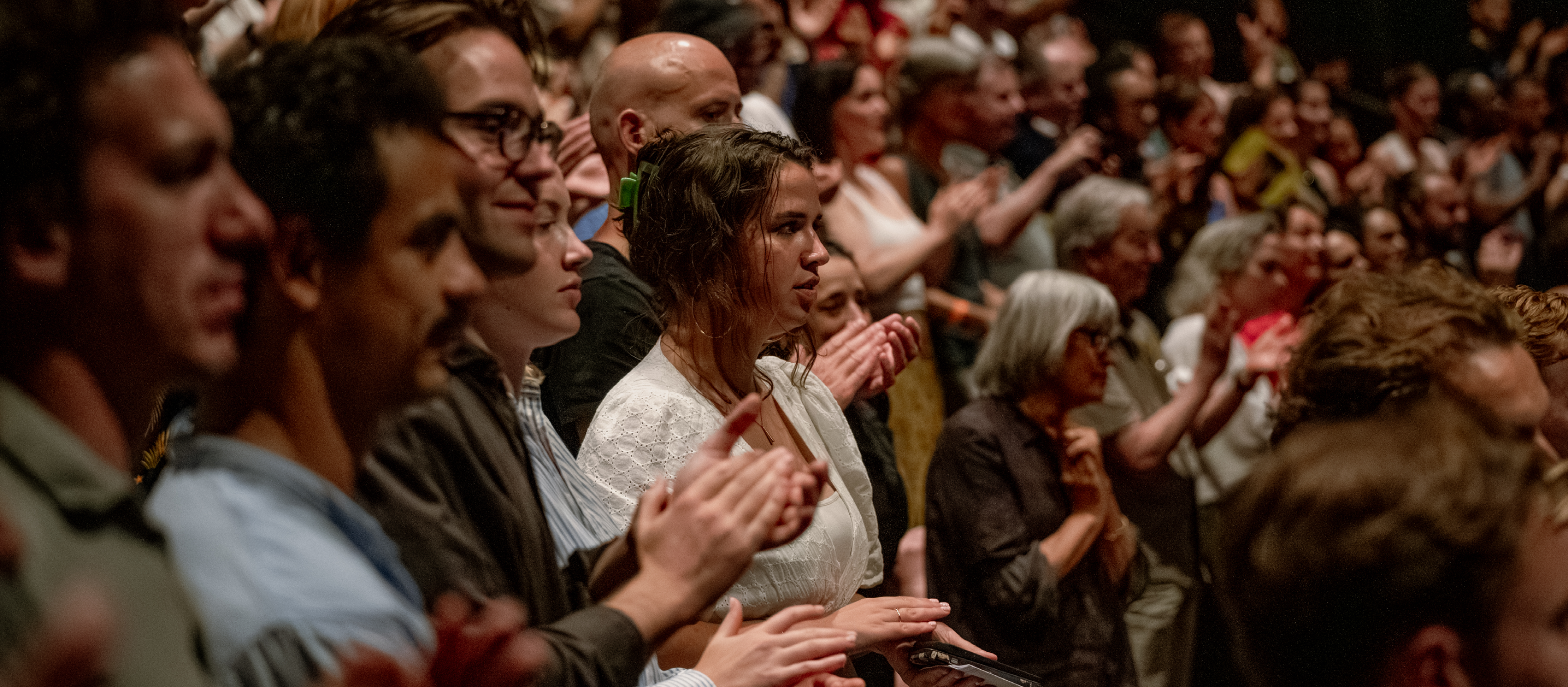
Visibility on social media grew through more intensive online collaboration with partners, an expanded content team, and a combination of organic and paid campaigns. This resulted in an increase in followers, greater international engagement, and attention from international artists and public figures.
To reach a younger and more diverse audience, the festival launched the campaign Off Your Feed, On Your Feet, inviting young people to experience live art rather than consume it solely through their screens. The campaign was shared by makers, influencers, and cultural ambassadors.
In addition, new collaborations were established with, among others, Club RAUM and the platforms Echobox and Double A. Through these partners, the festival reached the queer community and other new audience groups.
Media coverage
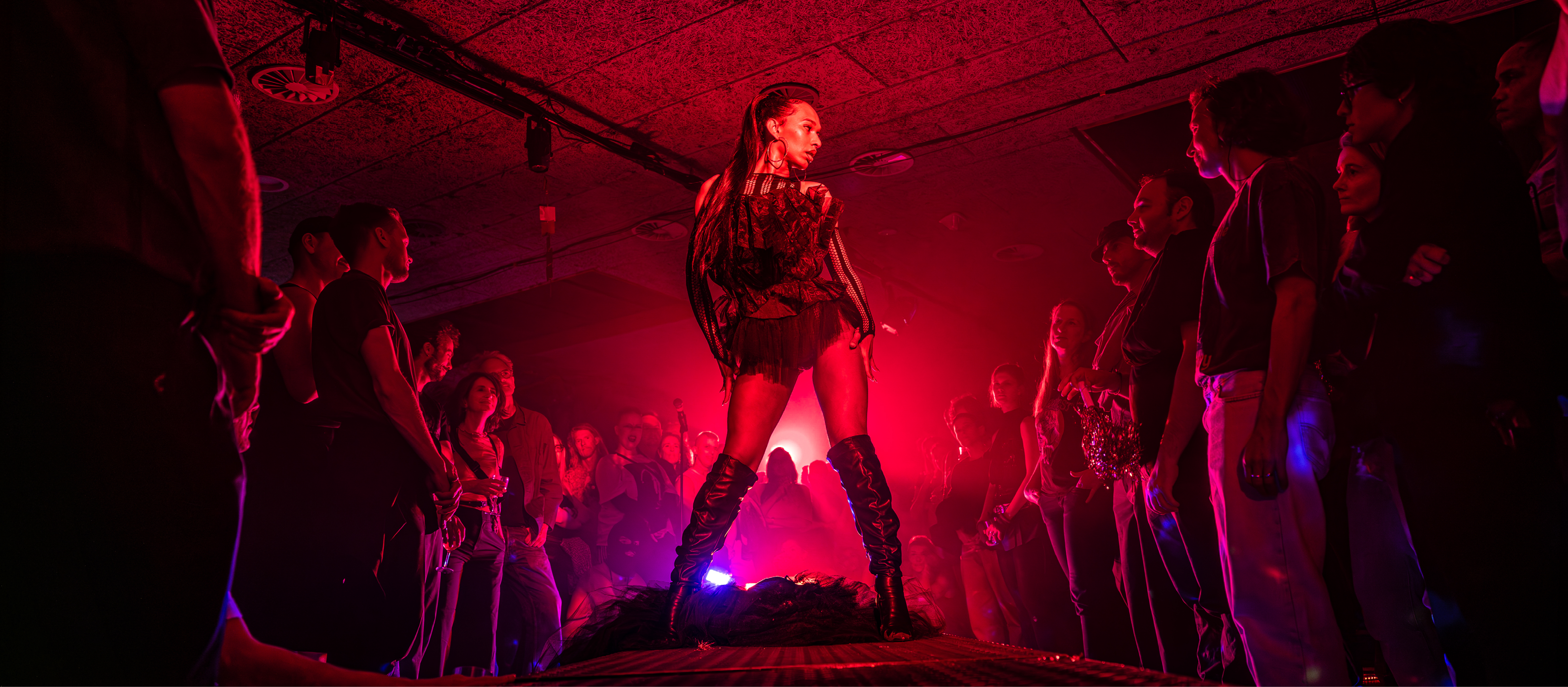
The festival once again received extensive media attention this year. Features were published in De Groene Amsterdammer and Het Parool, alongside interviews with associate artist Hildur Guðnadóttir in national newspapers and — for the first time — in Gonzo (Circus). Announcements appeared across a wide range of media, from Harper's Bazaar to puzzle magazines, while the festival also reached new publications such as OOR and Filmkrant.
Almost every performance was reviewed, including — for the first time — the youth production by DEGASTEN. Many productions received four-star reviews, further increasing the visibility of the festival programme.
Due to budget cuts at VPRO, the usual television broadcasts and YouTube videos were no longer available. NPO Klassiek helped fill part of this gap with an extensive interview with Hildur Guðnadóttir for its own online channels.
In total, 354 print articles and 3,660 online publications appeared in national and international media.
Campaign and visibility
Audience development was supported by an extensive media strategy with national and cultural partners, including DPG Media, NRC and De Groene Amsterdammer, complemented by radio campaigns, digital out-of-home advertising, and visibility at NS railway network stations and throughout the city. Through cultural listings, trade publications, and the distribution of flyers across multiple cities, the festival reached a broad audience.
As in previous years, the campaign was developed in collaboration with KesselsKramer and centred around associate artist Hildur Guðnadóttir. Her vision of the transformative power of art formed the conceptual foundation of the campaign, aligning with the festival’s international positioning under the slogan 'Holland Festival: groundbreaking performing arts'.
Photography and video were used to create a distinctive visual identity that was consistently applied across all online and offline communication throughout the festival.
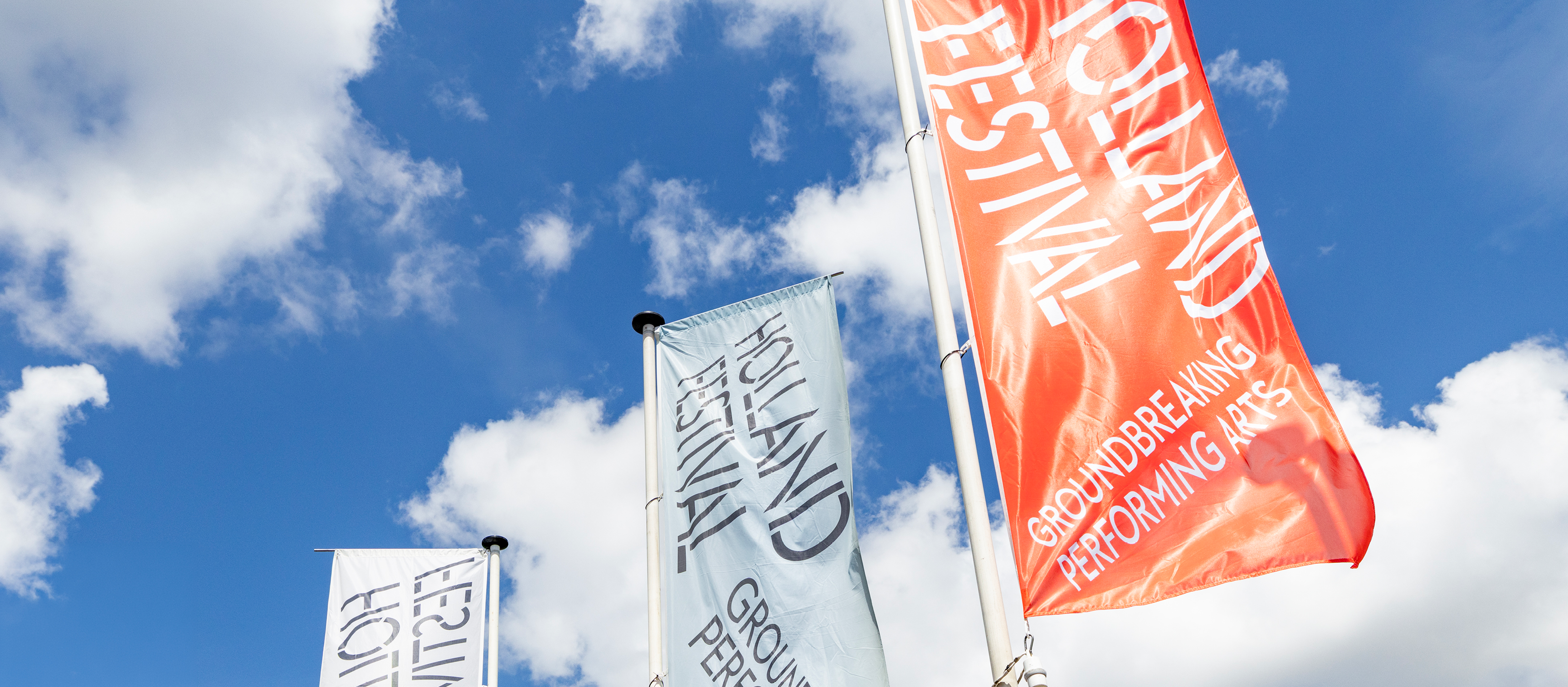
The festival was also highly visible in the urban landscape. Across Amsterdam, festival flags, posters, and large banners appeared at prominent locations. The campaign was displayed on digital screens throughout the city, at NS stations, and at HEMA locations, while festival venues were equipped with flags, stickers, and banners.
Audience communication
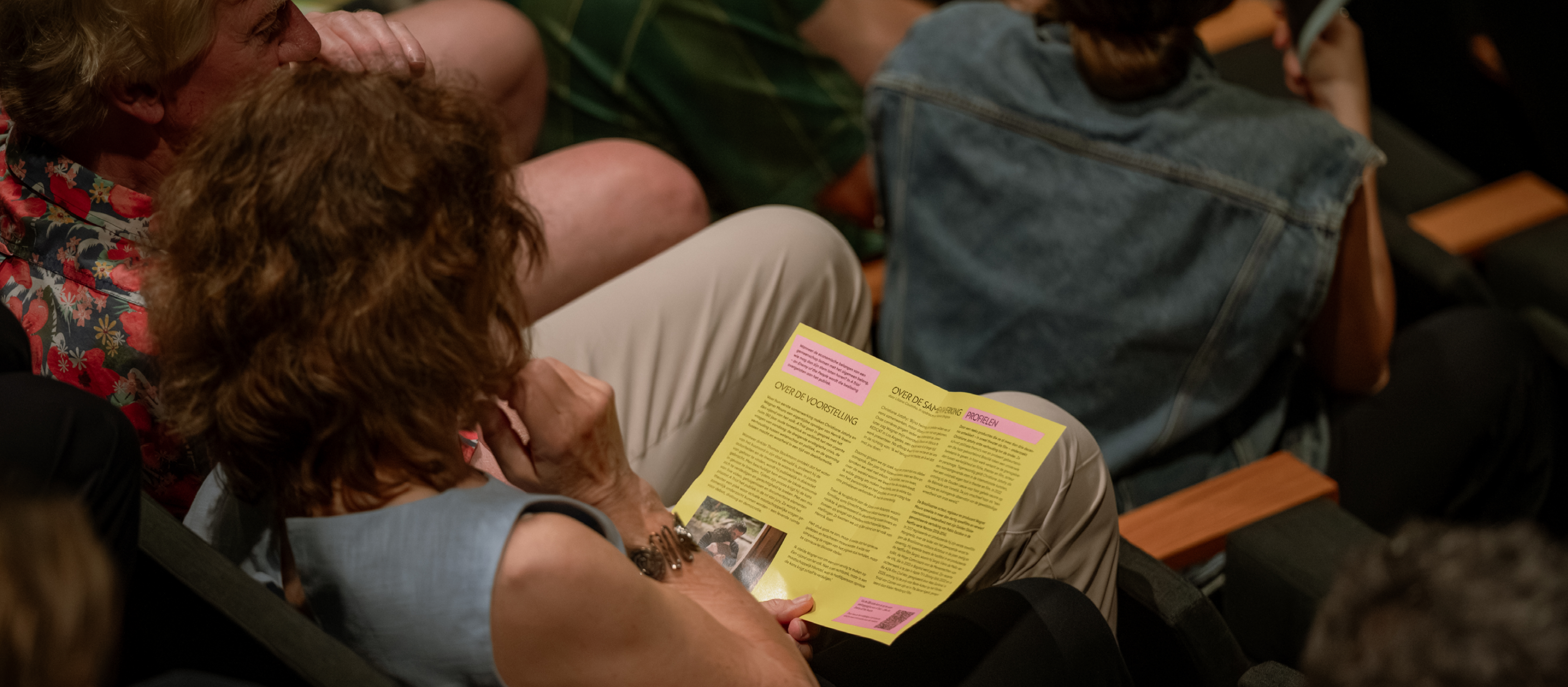
The leaflet was once again published in both Dutch and English, featuring short descriptions and clear labels for each performance. New this year were dedicated performance flyers for eleven productions. These provided additional context, including interview excerpts, background information, and references to thematic threads running throughout the festival. Through QR codes, audiences could explore the content in greater depth. The flyers were actively distributed at the relevant performances.
In addition, the programme booklets of the NTR ZaterdagMatinee and Dutch National Opera & Ballet were shared with service emails, made available via the website, and accessible through QR codes at festival locations.
Regional expansion
For the first time in the almost eighty-year history of the Holland Festival, a performance was presented outside the Randstad region. In collaboration with PLT Theater Heerlen, A Possibility by Germaine Kruip was presented both in Amsterdam and Heerlen. The collaboration reflected a shared ambition to make groundbreaking performing arts accessible to a broader audience.
Audience research
To gain deeper insight into the festival experience, the visitor survey was redesigned. Whereas last year a questionnaire was sent after each performance, this year visitors received a single survey after the festival. The results provide valuable insights into appreciation of both the programme and the festival as a whole, helping the festival further improve the audience experience.