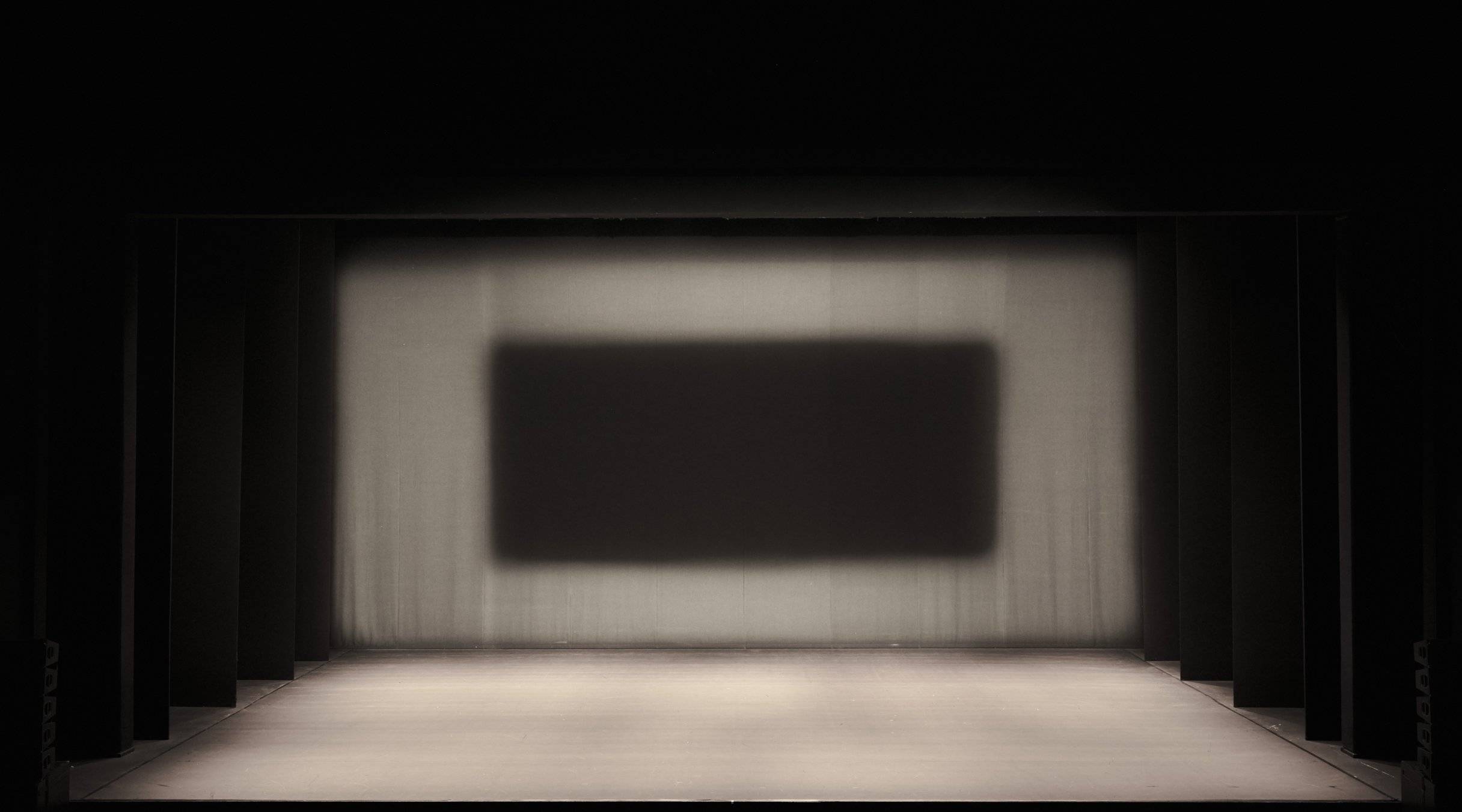
A Possibility is an experimental piece of theatre by Germaine Kruip that blends musical performance, audio, lighting, and visuals. It creates a unique and innovative audience experience. Commissioned by Factory International, A Possibility works on the notion of slowing down and creating space. Within the chaos and intensity of modern daily life, A Possibility forces the audience to detox from the constant dopamine hits, to sit for a moment, and to reflect. The work has been brought to Amsterdam as part of the Holland Festival in partnership with Limburgs Theaters.
Germaine Kruip is a Dutch visual artist who primarily works with performance, sculpture, and architecture. She lives and works between Amsterdam, Brussels, and London. Her practice is focused on merging time, space, and perception. She is most interested in exploring intangible phenomena such as art and ritual, daylight, geometric abstraction, and desires. Factory International, which is based in Manchester, is a creative company and charity that focuses on developing culture and art through diverse means, notably running the Manchester International Festival. I was delighted to see a work commissioned by them, as I participated in a course through their Academy, and it was touching to see the international nature of this Holland Festival manifest in such a personal way.
The show begins with several extended moments of silence in which the audience is left restless and uncertain, priming it for the unconventional theatre-going experience that they are about to have. It was interesting how the audience moved from an initial restlessness and confusion to engaging with the immersive nature of the show. The lights then dimmed in the auditorium, leaving only low lighting. At this point a faint white circle, blurred at the edges, can be seen on the screen on stage. This begins the first stage of the show. Faint instrumental music fades in and the audience is treated to an extended moment of music and shapes. On the screen, the blurred white circle persists and transforms into various iterations of forms utilising a white and black monochrome that creates a greyscale effect within the low lighting, reminiscent of the colourless vision that develops in semi-darkness. At some points we view a square that oscillates between a black centre and white border and its inverse. This flip gradually increases in speed until it seems to flicker between the two. At another point we are left in complete darkness, listening only to the music. I gradually acclimatised and became accustomed to this state of affairs, until the screen lit up with painful intensity. At other points the forms become less recognisable as shapes, with rectangular segments of the screen abstractly juxtaposing each other in light and darkness. At one point the audio loses its instrumental quality and instead plays noises as if we were listening to birds in a jungle. One extended section consists only of a kite shape in white on the black screen, which becomes less blurred and more distinct at the edges extremely gradually over the course of its presence onstage. The faint shading on the kite shape seems to move and adjust, creating the sensation of a central fold or seam, but doing so subtly that you question if it is really happening. This kite moment is the final segment of this half of the show, lasting long enough to soothe me into a lulled state of mind. I had fully accepted the darkness and slowly changing shape as my present reality. The innovative control of lighting within the auditorium had this fascinating and immersive effect, and the slow pacing of the show created a precious opportunity for meditative reflection. I felt challenged to engage with a way of being that went against the dopamine seeking habits I normally indulge in, in which I am often overstimulated. The first half of the show could have almost been a work of fine art installation with its reliance on visuals and complete taking over of the theatre space.
The two halves of the performance related to each other rather discordantly, leaving me with a sense of disconnect. The second half felt more in line with traditional performance, reminiscent of the experience of watching an orchestra or instrumental band. The show is interrupted dramatically with the raising of the screen which has been showing the shapes until now, and the backstage is lit up exposing the brick of the back wall, complete with boxes of material and a large moveable screen that is stored there. We view the back wall, dazzled by the sudden presence of light and colour. A woman comes onto the stage, and the audience waits in rapt anticipation for what is going to come next. Two long metal tubes, one hanging off the other, descend from the rafters, and the woman walks up to them. She begins playing the bottom tube, which is a brilliant copper colour, hitting it with two percussion sticks. She begins playing gently and softly, increasing in noise and intensity as the lights dim again and the sound reaches an almost painful intensity as we return to total darkness. A slight orange light starts to be seen reflecting off the copper tube and two lights begin showing us two figures now on stage. The lights come up again and we see two musicians posed at two new copper tubes on opposite sides of the stage, which they play for an extended piece of time. They leave, two more copper tubes come down, the audio plays without musicians for a time, and the tubes rise to form a visual arrangement onstage. When they come down again, four musicians take one each, and play for the audience. At this point, I would have enjoyed being able to read a book as the music itself was nice but it lasted rather long without much audio or visual variation. This worked in favour of the sensation of being given a break from high stimulus daily life, but perhaps went a little too far. The playing continues for some time, culminating in a final act in which the original two tubes come down and all four play on them, this time using the top one as well which has a distinctly different sound than the copper ones. This segment is much more dramatic than the previous playing, which had a soothing quality. The music ends in a crescendo and the players line up as the audience broke into a standing ovation.
A Possibility certainly offers a unique viewing experience. I was rewarded by being offered something that presented a break from the norm I have come to expect both within art and life, fascinating me in its originality, and creating space for my body to rest and my thoughts to flow. While perhaps not ideally suited for those who seek narrative-focused performances or pieces, as the show is certainly strongly influenced by the less narrative heavy and more concept oriented field of contemporary fine art in which Germaine Kruip primarily works, I personally found it highly memorable and worth my while to attend.